Have you ever stepped into your backyard after a storm and found a puddle in the same spot you saw one last winter? Or noticed that soil keeps washing away near a patio, while another part of the yard stays muddy for days?
These are not always random problems. Your yard may be showing signs that water has nowhere to go or is being directed to the wrong place.
Good drainage is about more than getting rid of one puddle. It protects your soil, plants, lawn, hardscape, and the areas around your home. Yards can also have compacted or clay-heavy soil, slopes, low spots, and irrigation issues that make water management harder.
In this blog, we’ll discuss the drainage problems homeowners should watch for and what you can do before they become expensive landscape headaches.
What’s Causing Drainage Trouble in Your Yard?
1. Water Keeps Pooling in the Same Part of the Yard
A small puddle after a heavy storm may not be a big concern. But if the same area stays wet again and again, there is probably a reason.
Common causes include:
- Low spots in the yard
- Poor grading
- Compacted soil
- Slow-draining soil
- Water flowing from a higher part of the property
- Irrigation runoff
- Missing or clogged drains
This can leave grass soggy, wash away soil, and create muddy areas that are difficult to use.
How to Prevent Water Pooling in Your Yard?
Start by watching how water moves during a good rain. Where does it enter the yard? Where does it collect? Does it move toward a patio, a fence, or the house?
Sometimes the answer is as simple as correcting the grade. In other cases, a surface drain, a catch basin, or a French drain-style system may be needed.
The important part is finding out where the water is coming from before choosing a fix. A low spot may look like the problem, but water could be flowing there from another part of the yard.
Adding a drain without checking the source may only solve part of the issue. The water could simply collect somewhere else or continue to overwhelm the new drain.
| Keep Your Yard Dry After the Next Storm – Call 916-412-3977 |
2. Downspouts Dumping Too Much Water Into Your Yard
Your roof can send a surprising amount of water into a small area during a storm. If a downspout empties beside a flower bed, walkway, foundation, or low part of the yard, that water has to go somewhere.
You may notice:
- Erosion below the downspout
- Muddy soil
- Washed-out mulch or bark
- Puddles near the house
- Water flowing across walkways
- Soil collecting around drains
This is a common issue homeowners face when trying to solve yard drainage problems. In some cases, several downspouts may send water toward the same low area, making the problem worse.
How Can You Prevent Downspout Drainage Problems?
Start by looking at where your downspouts send water. If a downspout empties right next to the house, onto a walkway, or into a part of the yard that already stays wet, you may be creating your own drainage problem.
Sometimes the fix is simple. You may only need to extend the downspout so that water is released farther away. In other yards, the runoff may need to be carried through a drainage line or collected in a catch basin before it reaches the problem area.
The best solution depends on how your yard is graded, where the water naturally flows, and whether there is a safe place for the water to drain. A drainage professional can look at the entire water path instead of simply moving the downspout and hoping the problem goes away.
3. Water Flows Toward the House Instead of Away From It
This is one drainage problem you should take seriously.
Your landscape’s slope affects where rain and irrigation water travel. If part of the yard slopes toward the house, water may collect beside the structure instead of moving away.
You might see:
- Water pooling beside the home
- Mud along the foundation
- Erosion near the house
- Wet areas around patios
- Runoff moving across walkways
Roseville’s local code recognizes that poor grading and other property conditions can cause drainage and erosion problems. In some cases, these issues can also affect soil stability and nearby properties.
How Can You Prevent This?
Don’t wait until water is already collecting against the house.
When planning your yard, think about where the water goes from start to finish, not just where it collects. If surface drainage is still a problem, another drainage system may help redirect the runoff.
And if you are installing a new patio, turf, lawn, or planting area, deal with drainage before the new landscaping goes in. Fixing water flow afterward can mean disturbing work you just paid for.
| Planning a New Landscape? Solve Drainage First – Call 916-412-3977 |
4. Soil is Washing Away Around My Yard
Not every drainage problem looks like standing water.
Sometimes water moves too quickly through a yard and carries soil, bark, mulch, or decorative rock with it. You may notice small channels forming in the soil after heavy rain.
This is especially frustrating on sloped properties. Water gains speed as it travels downhill, and concentrated runoff can create erosion.
What Causes Soil Erosion in Landscapes?
Common causes include:
- Steep or uneven slopes
- Downspouts releasing water in one spot
- Bare soil
- Poorly planned drainage
- Heavy runoff from hard surfaces
- Water being concentrated instead of spread out
How Can You Prevent Erosion?
The goal should not be simply to make water disappear. You need to slow it down and guide it safely.
Depending on the yard, this could involve better grading, drainage lines, planting, ground cover, rock, or another landscape feature that helps control runoff.
The EPA also recommends landscape approaches that slow runoff, spread it out, and allow water to soak into the ground where appropriate.
If erosion keeps returning to the same location, look for the source of the water rather than repeatedly replacing the washed-out material.
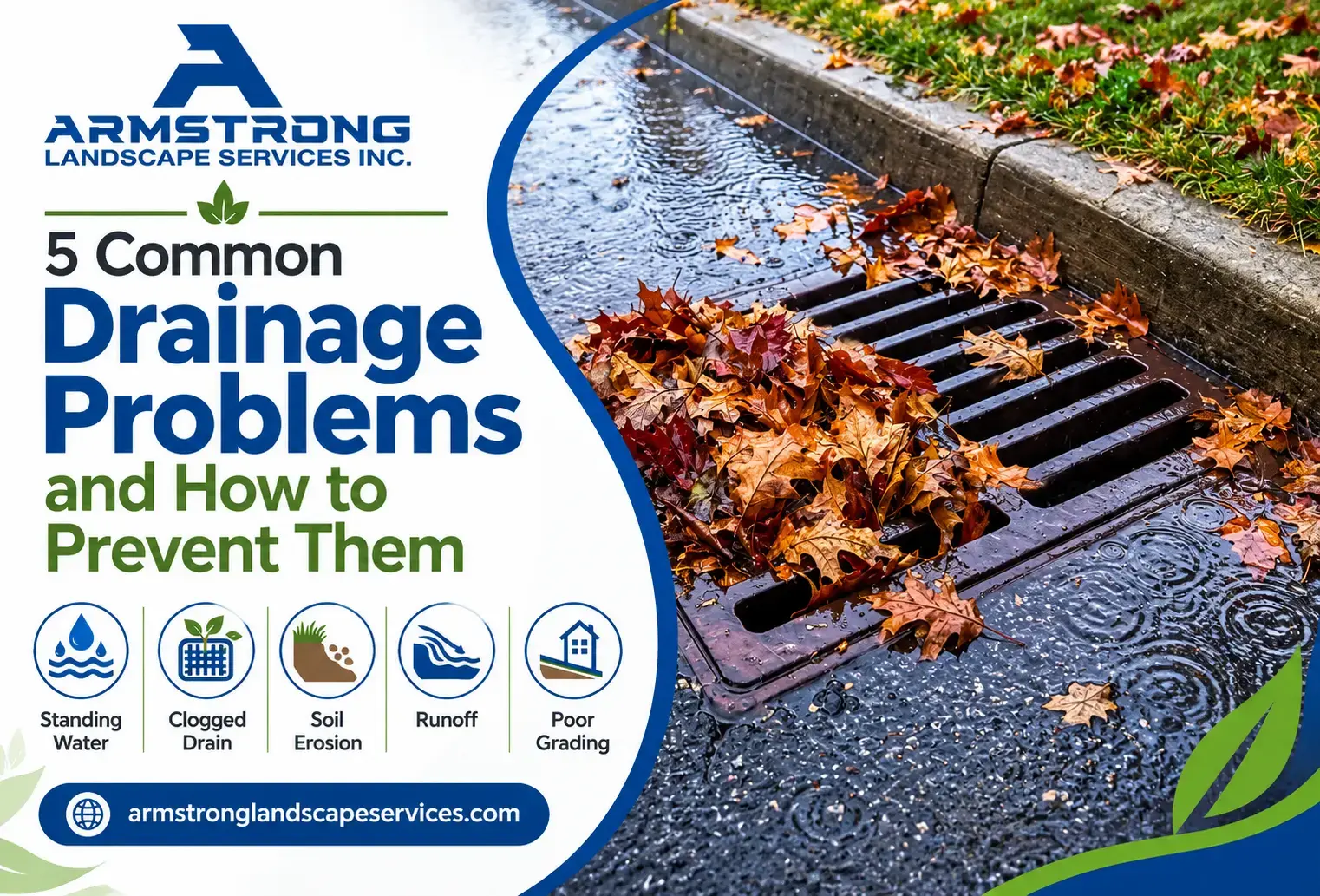
5. My Drainage System is Overflowing or Not Working
What if you already have drains, but the yard still gets wet? That doesn’t automatically mean you need a completely new system.
Existing drainage can develop problems such as:
- Clogged drain inlets
- Blocked lines
- Damaged sections
- Poor connections
- Drainage that is too small for the area
- Changes to the landscape that affect water flow
Leaves, soil, mulch, and other debris can also interfere with drainage openings.
How Can You Prevent Drainage Failures?
Keep drain inlets and catch basins clear, especially before periods of heavy rain. Also pay attention to changes in the landscape. A new patio, raised planting bed, artificial turf area, or added soil can change where water travels.
If an existing drain repeatedly backs up, don’t just clear the clog. Check the entire system to find the root cause.
Sometimes a drain repair in Roseville, CA is enough, while other properties may need a drainage addition or a redesigned section.
Which Drainage Solution Does Your Yard Actually Need?
This is where many homeowners get stuck. You may search for “French drain,” “catch basin,” or “yard drain” and assume you need one of them.
But the right answer depends on the actual problem.
| Drainage Problem | Possible Solution | What It Helps With |
| Water collecting in a low spot | Surface drain or catch basin | Captures surface water |
| Soggy area below the soil surface | French drain-style system | Helps move subsurface water |
| Downspout dumping near the home | Downspout drainage | Redirects roof runoff |
| Water flowing toward a house | Grading + drainage | Changes the path of runoff |
| Existing drain backing up | Drain repair | Restores or improves drainage |
| Runoff washing away soil | Grading, drainage, landscaping | Slows and redirects water |
There is no single drainage system that works for every yard. A good solution starts with understanding where the water comes from, where it collects, and where it can safely go.
How Can Homeowners Prevent Drainage Problems Before They Start?
You don’t have to wait for a major storm to find out whether your yard handles water well.
A few simple habits can help:
- Watch your yard during rain. Notice where water enters, travels, and collects.
- Check downspouts and make sure roof runoff is not creating a problem area.
- Remove leaves, soil, and landscape debris to keep drain openings clear.
- Pay attention to soggy grass. A constantly wet area may point to drainage or irrigation problems.
- Check for erosion. Small channels can become bigger problems over time.
- Think about drainage before landscaping. Address water movement before installing sod, turf, patios, or planting beds.
- Don’t assume every wet spot needs a French drain. It’s important to identify the cause first.
Yards can have different elevations, compacted soil, clay-heavy sections, and irrigation conditions. A drainage plan that works for one property may not make sense for the next. Following the above-mentioned simple steps can really help.
Drainage or Irrigation: Which One Is Causing the Problem?
Here’s a question worth asking before you spend money on a drainage system:
Does the yard get wet only after rain, or does it stay wet even when the weather is dry?
- If the problem happens mainly after irrigation, the issue could be a broken sprinkler head, a leaking line, overspray, or a watering schedule.
- If the problem continues after rain, poor drainage, grading, soil conditions, or another water-flow issue may be involved. Sometimes both systems contribute to the problem.
That’s why a proper inspection should look at drainage and irrigation together instead of automatically blaming one or the other.
When Should You Call a Professional for Drainage?
A little puddling after an unusually heavy storm may not require immediate professional help. But recurring problems deserve attention.
Consider getting an experienced professional to look at the yard if:
- Water repeatedly collects in the same place.
- Your lawn stays soggy for days.
- Water moves toward the house.
- Soil keeps washing away.
- Existing drains overflow.
- A drainage repair keeps failing.
- You are planning a new landscape over an existing drainage problem.
A professional drainage service provider can look beyond the visible puddle and determine why the water is there in the first place. That can save you from installing the wrong drainage system and having to redo the work later.
Takeaway
Drainage problems rarely fix themselves. A puddle, muddy side yard, washed-out soil, or overflowing drain may be a sign of a larger water-flow problem.
The good news is that you don’t always need a major landscape overhaul. Finding the source first makes it much easier to choose the right solution.
If your yard keeps fighting the same drainage problem, it may be time to stop treating the puddle and start fixing the reason behind it.
Common Questions About Landscape Drainage in Roseville, CA
What is the best drainage solution for a yard that stays wet?
There is no single best solution for every yard. A wet area may need grading, a surface drain, a catch basin, a French drain-style system, downspout drainage, or irrigation correction. The right choice depends on where the water comes from, the yard’s slope, soil, and where the water can safely go. An experienced drainage professional can inspect the property and recommend a solution based on the actual cause.
How do I know if I need a French drain or a regular yard drain?
A surface or yard drain is generally used to collect water sitting on top of the ground. A French drain-style system is often used when water needs to be collected and redirected below the surface. However, the names can be confusing, and one system may not solve every drainage issue.
The best approach is to have the yard evaluated first. A professional team for drain installation in Roseville, CA can look at the source of the water, soil, grading, and drainage path and explain which option, if any, makes sense for your property.
Why does my Roseville yard get muddy even when it hasn’t rained?
If a yard stays muddy during dry weather, rain may not be the only cause. Irrigation leaks, broken sprinkler heads, overspray, poor grading, compacted soil, or slow drainage can all contribute. Check whether the wet area matches a sprinkler zone or appears after irrigation. If you cannot find the source, an experienced landscape drainage professional can inspect the yard and determine whether irrigation or drainage is responsible.
Can poor drainage damage my landscaping?
Yes. Repeatedly wet soil can stress some plants and grass, while fast-moving runoff can wash away soil, bark, mulch, and decorative rock. Poor drainage can also make patios, walkways, and parts of the yard difficult to use. Fixing the water-flow problem before replacing damaged landscaping is usually the smarter approach. Professional drainage services in Roseville, CA can help identify the cause and prevent the same damage from returning.
Can drainage be added to an existing landscape?
Yes. Existing yards do not always need to be completely redesigned. Depending on the problem, a professional may be able to add a catch basin, drain line, French drain-style system, downspout drainage, or another targeted improvement. The existing grading, hardscape, plants, irrigation, and available discharge area all matter. An experienced landscaping contractor can evaluate the existing landscape and determine what can be improved without unnecessary work.
Need Drainage Help in Roseville? Contact Armstrong Landscaping Services Inc.
Whether you need drain installation or drain repair in Roseville, CA, Armstrong Landscaping Services Inc. can help you find a practical solution for your property.
We’re a locally owned landscaping company serving Roseville, Rocklin, Lincoln, Granite Bay, and nearby Northern California communities. Our owner, Brandon Armstrong, directly works with each client and helps them find the best drainage and landscaping solution.
Armstrong Landscaping Services Inc. is also licensed as a California contractor (CSLB #1110577). Our drainage services in Roseville include new drain installation, drainage repair, drainage additions, surface drains, catch basins, French drain-style solutions, and downspout drainage support.
Give us a call today at 916-412-3977 to get started.